Monday, July 23, 2012

Your time is limited...

From time to time one does hear or read some remarkable quotes. The following is one of them, thus I have written it down to remind me an insight of life.

Your time is limited, so don’t waste it living someone else’s life. Don’t be trapped by dogma — which is living with the results of other people’s thinking. Don’t let the noise of others’ opinions drown out your own inner voice. And most important, have the courage to follow your heart and intuition. They somehow already know what you truly want to become. Everything else is secondary 
Steve Jobs (1955 - 2011)
R.I.P. Steve Jobs.

Friday, June 22, 2012

A quote to remember...Mark Twain

Today I came across this quote. I am sharing it now.

“Twenty years from now you will be more disappointed by the things that you didn’t do than by the ones you did do. So throw off the bowlines. Sail away from the safe harbor. Catch the trade winds in your sails. Explore. Dream. Discover.” Mark Twain.

Sunday, January 01, 2012

New year. GOD has plans for me and my family.

Weel to you all my friends in this social network. A new year comes to a beginning. Time to leave past times and go ahead. My life is fulfilled by my family and guided a hundred percent by GOD....and this is a beginning of hopefully GOD plans for my and my family. All I have to tell you all. GOD bless you and best of wishes to you all. Happy new year and GOD allows you better things as I feel it will be.

Wednesday, February 24, 2010

Apache Web Server Birthday

Yesterday, Feb.23rd, 2010. The Apache Software Foundation celebrates the 15th birthday of its Apache HTTPD, the 70% market share web server.

I wanted to make a note on this so I can know how long a software project is.  You can read more here The Apache Software Foundation Announces the 15th Anniversary of the Apache HTTP Web Server

Saturday, April 18, 2009

WWW and Linux birthdays


Did you know when was officially launched the WWW?
Did you know when Linux 1.0 officially launched?

Answers
The World Wide Web Is 20 Years Old Today (exact day is March 13/2009).
Happy 15th Birthday Linux (exact day is March 13/2009).

I noticed this news in this other blog by Tom Kyte blog which I frequently visit and considered it was very interesting to post here too, the original entry is here. As Tom says there
Two creations that have changed a lot of things.

Java and a Gremlin

I was today looking for a mailing solution to implement in Spring Framework (better to spend some time looking for a prebuild solution than trying to implement the own one) and came across to the SpringSource blog area and noticed an interesting entry by founder Spring Framework project Rod Johnson called Enterprise Java and the American Motors Gremlin, on Apr.14th/2009 (well, and also noticed it was published on my birthday's day, what a coincidence).

Why I posted this link and entry to another link/entry.
Because I have always heard of the inproductive Java Tooling and platform is and why other models are more productive for developers to use. And this entry gives some clues to the future ahead, and also to have it set.

Tuesday, December 18, 2007

Spring MVC highlight

Today when I opened Spring Framework web site I noticed a poll question shown in the image at left (results shown only), it intrigued me to know which web controller was most used. As I like Spring MVC I thought, umm, it is going to be last, but to my surprise it is second after Struts (well, here about Struts it must be fair to know if it is Struts 1 or Struts 2 or it is both). This tells me that I chose a solid technology and I will use it in my studies until my employer or a client likes to use it somehow. Another clue about the good and solid web framework Spring MVC is given in this blog entry entitled

I relented to Spring MVC; easy install IE7 feed reader web application
.

Monday, December 10, 2007

Books from Manning

It has been a long time since I have not bought a book, in fact, a printed book. This blog today is to talk about books.

In my library I have had the pleasure to be able to buy books, not merely a photocopy or any other media. I buy these books and read them a little but the work absorbs most of the time and it is scarce to read about all the information needed to make oneself job much better, but knowing information is there no matter if it is as a reference pays the bill.

Fortunately, I have those books about literature, computers, in both English and Spanish and the preferred way of reading them are is in printed form, the classic way, but as internet and the technology permeates our lives it becomes more and more necessary to use other ways to acquire knowledge in an evolution manner to which the PDF has universally been the master for delivering a printed book to the digital era, which let's say, it keeps the earth from losing trees to make paper to make books, other materials are used to get a digital book to your hands (the use of computers to materialize them, in fact, a book is first drafted in a computer, then goes to printing in paper and printing electronically).

In the past I have been a little reluctant to buy complete books in Electronic book for copyright reasons and other facts, they don't allow me to read in any computer I wish, and I bought some, but as it is a little harder to read in a computer screen, it was left aside. Other they are password protected and unless I do not forget the password, I can read it anywhere I like. But, like or not, it is a cheaper way to have books and the space required to shelve them is minimal, only a few gigabytes of your computer hard disk space is required. And I have also to admit that I now collect any PDF or electronic book (in a way it can be read with a portable reader like Adobe Reader or PDF Reader) to have a full reference of data whenever I need it most.

All of this leads me to this final paragraph. Last Saturday I spent some bucks buying PDF books. They are entitled:

  1. Spring in Action, second edition by Craig Walls with Ryan Breidenbach

  2. Test Driven -
    Practical TDD and Acceptance TDD for Java Developers
    by Lasse Koskela


I bought these books to leverage higher my knowledge to Spring Framework, and TDD; and again, to be a better software developer and craftsman. There are times when a book must be bought because, specially these books, are not available, pity me, the-free-electronically available-book-resource, that is, in Internet; and one honor is to buy and respect the resources and time spent by the authors to get those contents to you, but as said, there are times when one needs that resource for free due to limited money to spend (if one could buy all one wish, there could be not enough money to get them), thus, if I need something the most, I must buy, and if it was get for free, the a share of gratitude and debt is granted herein.


I will, to the public, keep informed with my readings about these books, to start sharing my knowledge to the Universe.

Monday, December 03, 2007

At least in the forum and eMailing list arena

I have always been reluctant to use neither eMailing lists to ask the community nor a forum, because I have never known how to use these tools, but these days before today I began to use the eMailing list to ask something I needed and by the results received I got to use the forum media too. That is why I subscribed to the forum.springframework.org to ask something to the community. Both tools are invaluable resource to get acquainted to something and a learning tool by the way. It also lets you share knowledge and know people who has possibly worked your problems in one way or another. That is why I post this blog to let people know I am also using these tools. You can find me at this forum as the user Carlos Adolfo Ortiz Q'. I am also participating in the APPFUSE users list. MyFaces developer and user lists. I would wish you could be there by the way.

Tuesday, September 18, 2007

A new buzzword to my mind

I recently was reading my eMail and came across this editorial which I will reproduce verbatim
Today I'm attending a local ArcReady event in Indianapolis,
my home town (www.ArcReady.com). The topic of the day is Web 2.0.
As I've mentioned in the past, Web 2.0 is one of those nebulous
topics that if you ask ten people to define, you'll get eleven
answers. In fact, I'm working on a book to help define Web 2.0
and am finding that there are a variety of answers to the "what
is Web 2.0" question. There are also a large number of similarities
between people's definitions.

As points to ponder, consider the following statements. In your
opinion, Which of these are accurate?

- Web 2.0 is AJAX
- Web 2.0 is Software as a Service
- Web 2.0 is all about the Web as a platform.
- Web 2.0 is about empowering users
- In a Web 2.0 world, breadth of information is more important
than accuracy
- In a Web 2.0 world, the user should be viewed as a co-developer
- Flashing interfaces are a requirement of Web 2.0

If you thought that these were all true, then you and I disagree.
AJAX is a technology. Web 2.0 is built on technology; however, it is
not *the* technology.

Sofware as a Service generally falls into the Web 2.0 world. The Web
as a platform is also considered a part of Web 2.0; however, Web 2.0
is about more than just the Web as a platform.

Web 2.0 is absolutely about empowering users. This is one concept
where most industry leaders will agree.

Where you might find differing opinions is on whether breadth of
information is more important than accuracy. If, however, you look
at some of the leading Web 2.0 sites such as Wikipedia, Twitter, and
Facebook, you'll see that breadth does in fact seem to be a stronger
characteristic than accuracy.

The idea of the user as a co-developer should be scary to you as a
developer. In fact, this concept is becoming true. If you consider
your task as a developer to be the building Web applications, then you
begin to see that the users are getting more involved in this. This
can be at the level of adding content that changes the page. It can
also
be at the level of grabbing services and mashing them together with
other
services. The end-user is getting more involved. More importantly, the
tools are getting easier to use to build sites, so if you cut out the
users, you might end up having them cut you out.

Finally, the last bullet was about Web 2.0 equating to flashy
interfaces.
While most Web 2.0 sites have flashy interfaces, you will find that
most
industry leaders agree that it is the social interaction and aspects
that
are more indicative of a Web 2.0 application than the actual flashy
interfaces. Having said that, users are looking for "sizzle".

Do you disagree with my opinions? If so, swing by the feedback forum
and
let me know your thoughts.

Until next week!

Brad!
---------------------------
Bradley L. Jones
www.CodeGuru.com
webmaster@codeguru.com
---------------------------

In fact is my first reading on the subject and in my IT career it is something to read on. My interests are so varied that an ocean of information over me is drowninmg me but I like it because it makes my brain think. Well, this is my first blog on web 2.0 explorations as it is a common buzzword these days.

Web 2.0 explorations will get me to learn more about Java, Ruby, C#, any way, many, many tools and items to have my day filled with a glamorous knowledge expectation. Thanks GOD for giving me this career, very speedy but the one I like most. Stay tuned to read more about this new buzzword in my vocabulary.

Monday, April 30, 2007

Java maturity

See the time this entry was posted. This reflects Java maturity. I decided to post this entry to remind me about some points and facts about the Java Platform and I put the words of another person in my mouth but this line of thought I share.
GPL Java could not have come at a better time to make a run at the Linux desktop, thanks in part to Microsoft releasing Vista. Whatever one's feeling about Microsoft, they are often a trend setter. So far, when it comes to moving away from harder to work with, bug prone, and security hazardous languages like C and C++ for desktop application development, Microsoft has been ahead of the game. The shift away from C++ to Visual Basic was the start of the trend, but with Vista, and Microsoft's movement towards "All new desktop applications should be written as managed code in .NET", the ante is now significantly higher. Developers in the world of Windows desktop applications are now being encouraged to write their new applications in managed .NET code that makes their lives easier and less error prone, as well as avoids major causes of security holes like buffer overflows. Linux desktop programmers, however, are still doing most of their work in C or C++, where they are still managing memory by hand, still getting routine segmentation faults because of memory management problems, and still dealing with the security hassles of C and C++. The time is definitely ripe for a change in the way developers write desktop applications for the Linux platform. In fact, that change is long overdue.

If Linux desktop application developers are going to make the transition to more productive managed languages, like Windows developers are doing, there are only two real platform choices they have: The Novell sponsored Mono project, or Java.

To me, Java seems like a much more solid choice for several reasons. For one, it has a substantial head start on Mono, with over five more years of development behind it than Mono. Java is already a very stable and mature platform, where as Mono is still evolving quite rapidly. Also, Java has a vast collection of open source tools and libraries available to help with just about any type of development that one might want to do--something that Mono can't even begin to match yet. Furthermore, Java has a much larger development community in place already, and remains the most popular language for open source projects on SourceForge, as well as on FreshMeat.net, where Java has 5383 projects compared to only 284 for C#--making Java nearly 19 times more popular than C#. And finally, Mono is doomed to always lag behind the official .NET implementation due to the fact that Microsoft's actual implementation is completely closed source. Now that Java is open source under the GPL, the open source GPL version will always be up to date, since it will be the "official" implementation. Mono also has a hidden licensing trap that Java does not. Because the class libraries are licensed under the MIT license, which has virtually no restrictions on what can be done with the software, companies can conceivably patent their improvements or modifications on the libraries and then enforce those patents on anyone else making use of of the improvements or modifications. There is an interesting article on NewsForge about this problem. It's a little old, but still good reading.
(http://www.newsforge.com/article.pl?sid=02/02/19/1651244)

OK, granted I may be a bit biased in favor of Java. But I think my above points were at least reasonably objective as to why Java makes the best choice for the future of the Linux desktop. With the open sourcing of Java under the GPL, Sun has removed that final barrier to entry, since all of the performance, or "it doesn't look native" arguments are no longer valid.

And finally, both Linux and Java benefit from using Java on the Linux desktop, since both of them want the same thing, and can mutually contribute towards the same goal. Both Linux and Java want greater desktop market share. Java can give this to Linux by providing a more productive, more secure, and easier to debug platform for writing applications, as well a platform so that applications written in it can also run on Windows. This helps protect the developer's investment in a minority platform when it comes to the desktop. And Linux has something to offer Java as well: a second chance at becoming a major player in the desktop application arena. Linux is slowly but surely gaining desktop market share. Java can help it grow, and also grow with it. It could be that desktop Java and desktop Linux are a match made in heaven.

I read this commentary in a Javalobby.org eMail sent to me on Tuesday, March 06, 2007 from Mike Urban and if you want to read all of that entry by yourself link to this

Thursday, April 12, 2007

On Spring Framework

When I started to study Java back on 2002 I attended a course on Websphere Application Developer or a name like that based on the version fourth of the product. Since then I spent many hours surfing the internet in search for information about the J2SE and documents about Java in any category. From the course I was linked to www.theserverside.com, and this was my first source for news on the Java platform, and this led me to another sites as well. Soon I acquired a book named Expert One-on-One J2EE Design and Development by Rod Jhonson on Mar.23/2003 which became a classical book. Based on the ideas exposed on this book and the source code included for this book, a new framework was born, named Spring Framework and a site is devoted to this one found at www.springframework.org and the final release for version 1 was due on March.24/2004 more here. And now I am fond of this framework and it is directing my thoughts in the Java space, which has led me to collect many resources for this fabulous framework which I will post here on the Spring Framework tag, coming soon to a blog near you. Now the spring framework is in the version 2 series. Have a look here. And a good blog about spring issues maintained by Craig, Walls writer of the Manning book Spring in Action.

Monday, February 05, 2007

Do you know the meaning of OOP, RAD, ORM, DRY, KISS, TDD?

Do you know the meaning of OOP, RAD, ORM, DRY, KISS, TDD? Again! Well, if you are a technician as I am and specifically for Software development you should be familiar with these terms, but if you don't then take a look a this article

  • OOP: Stands for Object Oriented Programming or as of Wikipedia http://en.wikipedia.org/wiki/OOP
  • RAD: Stands for Rapid Application Development or as of Wikipedia http://en.wikipedia.org/wiki/RAD
  • ORM: Stands for Object Relational Mapping or as of Wikipedia http://en.wikipedia.org/wiki/ORM
  • DRY: Stands for Don't Repeat Yourself (also known as Once and Only Once or Single Point of Truth --SPOT-- or as of Wikipedia http://en.wikipedia.org/wiki/DRY
  • KISS: Stands for Keep It Simple Stupid or as of Wikipedia http://en.wikipedia.org/wiki/KISS
  • TDD: Stands for Test-Driven Development or as of Wikipedia http://en.wikipedia.org/wiki/TDD
NOTE: All entries to Wikipedia are typed in the search engine, thus you may encounter many definitions thus openly knowing other meanings to the acronym being referred to here.

I hope you had refreshed your memory, don't you?

Well, It has been a long time since....

Well, since Aug.26/2006 I have not fed this blog with another entry. I intend to use more and more the blogging system and as such I intend to publish more articles. I am getting to the point in my life where this is necessary as a full structural life-planning is on the way. My last 2 to 3 years have been spent fulfilling many unfinished task such as my College Grade and this year is the culmination in that effort as this is the last semester taking classes and continuing the graduation process which consists in making a thesis proceeding and other stuff. Last year I met a wonderful woman and other parts are beginning to evolve. I am unemployed up to date but many opportunities are on the way and I feel more and more tied to God. But this blog is about me and my technical affair (if you want other material in my natural language use my cousin blog -- see about me entry for details).

More entries are to come on the way, keep in touch.

Friday, August 25, 2006

A very simple cite to muse about.

Today in my readings I came to the site Open Source live and maybe in the future the following cite is taken out of this site but I wished to have here in my blog to remember once I saw it and to muse again on its meaning. I don't know the owner or who wrote the cite.
Here it is
I HEAR and I FORGET.
I SEE and I REMEMBER.
I DO and I UNDERSTAND.

Friday, August 11, 2006

See for yourself

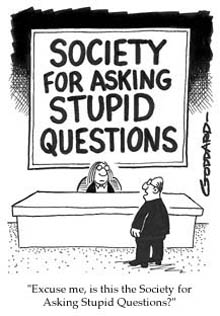
Well, here is a funny image that requires no explanation whatsoever.


So think an stupid question and go to the society, perhaps it gets answered.

Say no to sending MS-Word documents over eMails

This is an article as Tom Kyte points out to this just say no to send MS-WORD where the author for the article gives many reasons not to send ms-word documents inside an e-Mail message because the format is fixed, not everyone has the correct version, etc, so, I encourage you to read the article to learn what is actually happening with this reasoning.

Thursday, August 10, 2006

My Chinese Name spelled

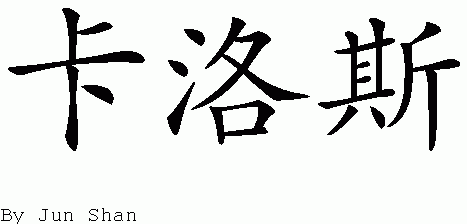
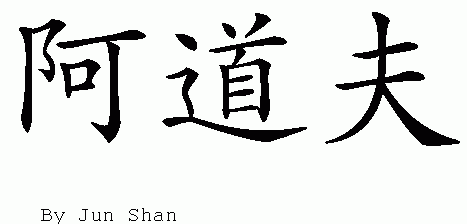
Recently a friend of mine pointed me a site where I could find my name written in Chinese characters. You can go to that site here and if you want to see my name there point to this link, but if you are lazy at going there, here it is shown below:
First is the Carlos part


Then it is for Adolfo part


Well and if you want to see my new site to see my photos you can link to here enjoy.

Sunday, July 30, 2006

My ICQ Test

I recently took a Tickle for the classic IQ test (click here to get one) and got a grade of 113 or as they quote:
"Your Intellectual Type is Precision Processor. This means you're exceptionally good at discovering quick solutions to problems, especially ones that involve math or logic. You're also resourceful and able to think on your feet. And that's just some of what we know about you from your test results."

It is interesting my result provided that some questions were guessed, what would have come about if a hard reasoning to those guessed questions would have been made, perhaps a higher grade, or lower grade. I think this is good to me.

Monday, July 03, 2006

On Asimov's rules of robotics

I have always been amazed by Issac Asimov's literacy. He coined what in scince fiction are called the three laws of robotics.
  1. A robot may not harm a human being, or, through inaction, allow a human being to come to harm.
  2. A robot must obey the orders given to it by human beings except where such orders would conflict with the First Law.
  3. A robot must protect its own existence, as long as such protection does not conflict with the First or Second Law.

You can find the complete explanation at the wikipedia here. He was a wise man, he wrote more than 700 books and was an encyclopedic wisdom. And after these rules some other things are patterned. This note is inspired by having read the following article posted in www.onjava.com named What's New in Eclipse 3.2 Java Development Tools which states as in the following quote
The JDT compiler was originally written for VAME, and modified for Eclipse. It was built on what the developers call "The Three Rules of Compilation," patterned after Asimov's rules of robotics:
  1. Correctness: A compiler may not harm a source program.
  2. Efficiency: A compiler must be fast, except where speed would conflict with the first law.
  3. Friendliness: A compiler must assist the user to correct programming errors, as long as such assistance does not conflict with the first and second laws.

Thus this is to me a way to apply wisdom to extend knowledge.